Why Manufacturing are Prime Ransomware Target (And How an MSP Stops It)
Ransomware Attacks on Manufacturing Companies: What Every Plant Manager Needs to Know
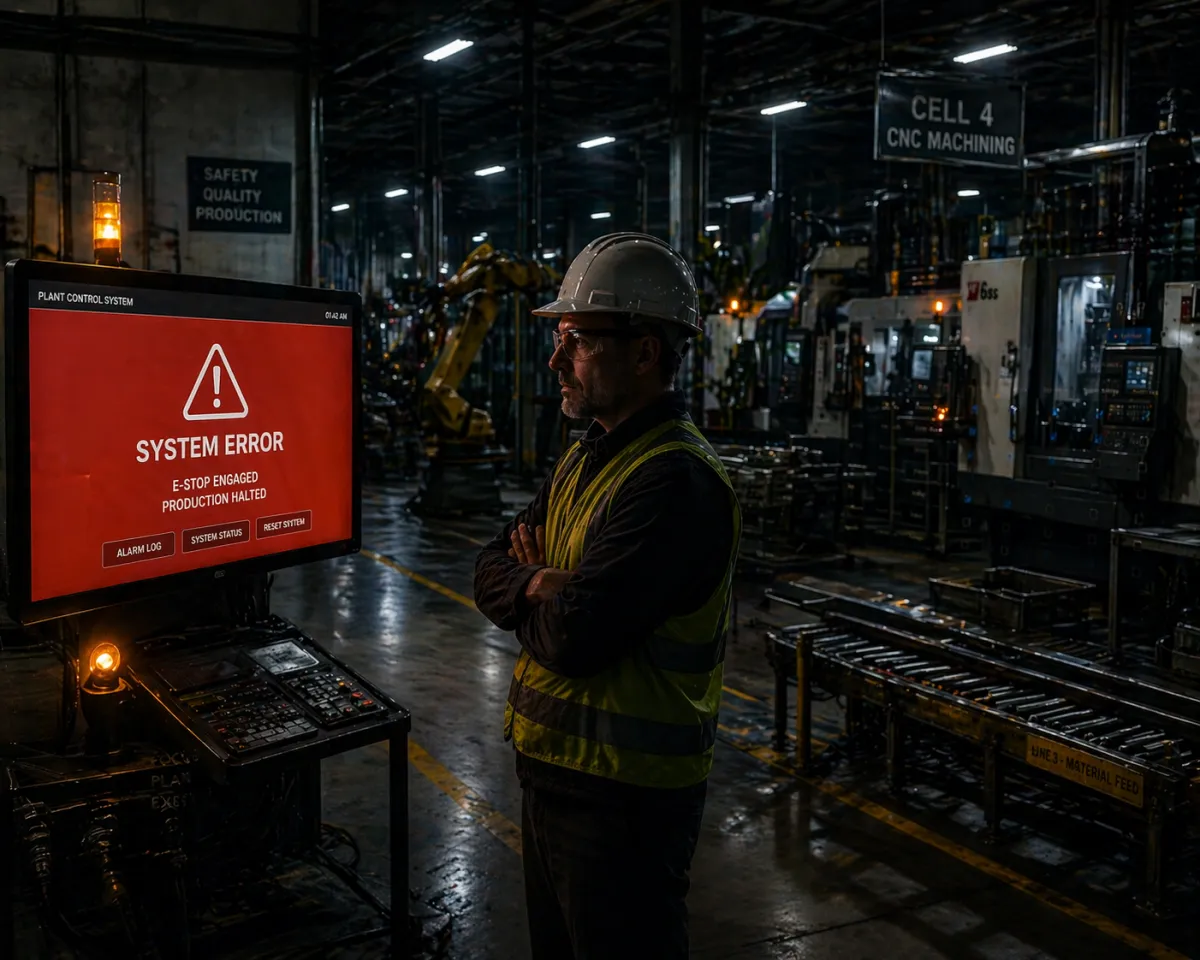
Production floors run on uptime. When a ransomware attack hits a manufacturing company, it does not just lock files. It stops machines, halts shipments, and freezes the supply chain. The question is not whether your facility is a target. According to IBM X-Force, manufacturing has ranked as the most attacked industry for three consecutive years.
This post breaks down why manufacturing companies attract ransomware attackers, what the real cost looks like, and how a managed service provider builds the layered defense your operation needs.
Why Manufacturing Companies Are Prime Ransomware Targets
Attackers do not choose manufacturing by accident. They choose it because it works.
Three conditions make manufacturing companies uniquely vulnerable to a ransomware attack.
Legacy Systems Still Running the Floor
Older programmable logic controllers (PLCs) and SCADA systems were built to run machines, not defend against cyberattacks. They often cannot be patched. They sit on the same network as modern workstations. Once an attacker gets past the perimeter, these systems offer almost no resistance.
Operational Pressure Makes Paying the Ransom Tempting
Every hour a production line is down costs real money. Sophos reported that the average manufacturing company spent over $1.82 million recovering from a single ransomware attack in 2023. When a plant manager is staring at a stopped line and a ransom demand, the pressure to pay is enormous, even when paying does not guarantee recovery.
Intellectual Property and Supply Chain Data Have Real Value
Manufacturing companies hold proprietary designs, vendor contracts, and pricing data. Attackers know this. Ransomware groups increasingly combine file encryption with data theft, threatening to publish sensitive information if the ransom is not paid. This double-extortion tactic raises the stakes well beyond a typical IT incident.
For a broader look at why manufacturing companies are the most attacked industry, the root causes connect directly to the convergence of IT and OT systems that most facilities have never fully secured.
What a Ransomware Attack Actually Looks Like Inside a Manufacturing Company
Understanding the attack chain helps clarify where defenses need to be built.
Initial Access
Most ransomware attacks on manufacturing companies start with a phishing email. An employee clicks a link. A credential is stolen. Sometimes attackers buy access through the dark web from a previous breach that the company never knew about.
Reconnaissance and Lateral Movement
Once inside, attackers move quietly. They map the network, identify high-value systems, and look for backup servers. This stage can last days or weeks before anything visible happens.
Deployment
When attackers are ready, they push ransomware across the network simultaneously. Files encrypt. Backups get targeted. The ransom note appears.
The Decision Point
Pay, recover from backups if they are intact, or rebuild from scratch. Most companies without a tested incident response plan take 7 to 21 days to resume full operations, according to Sophos research on manufacturing recovery timelines.
The Manufacturing Industries Most Exposed to Ransomware
Not all manufacturers face the same risk profile. IBM X-Force and Verizon DBIR data consistently show that certain sectors within manufacturing carry higher exposure to a ransomware attack.
Industrial and Process Manufacturing
Facilities running SCADA and industrial control systems face the widest attack surface. Legacy OT systems were never designed with cybersecurity in mind. When IT and OT networks are not properly segmented, a single phishing email can give an attacker a path to the production floor.
Food and Beverage Production
Food manufacturers operate under tight regulatory requirements and just-in-time supply chains. A multi-day shutdown can mean spoilage, contract penalties, and regulatory scrutiny. Attackers know this and use the urgency as leverage.
Aerospace and Defense Subcontractors
Defense supply chain companies handle controlled technical information and are frequently targeted for both ransomware and data theft. CMMC compliance requirements are raising the bar, and managed cybersecurity services aligned with those frameworks are becoming a baseline expectation.
What Can an MSP Do to Protect a Manufacturing Company From Ransomware Attacks?
This is the question manufacturers are asking more than ever, and it deserves a direct answer.
A managed service provider does not just add antivirus software and call it done. The right MSP builds a layered security architecture designed specifically for manufacturing environments, including both IT and OT systems. Here is how that protection is built, layer by layer.
24/7 Monitoring and Threat Detection
Attackers do not work business hours. A managed service provider with around-the-clock monitoring uses tools like Sophos MDR to watch network activity continuously. Unusual login attempts at 2 a.m., lateral movement between workstations, and data being staged for exfiltration all get flagged and investigated before they become a full ransomware attack on a manufacturing company.
Endpoint Protection on Every Device
Every workstation, server, and laptop on the network is a potential entry point. Sophos endpoint protection, deployed and managed by your MSP, monitors behavior at the device level. Rather than relying solely on known malware signatures, modern endpoint detection and response identifies suspicious behavior patterns, even from new ransomware variants that have never been seen before.
Immutable, Air-Gapped Backups
Ransomware groups specifically look for and delete backup copies before deploying encryption. An MSP designs a backup architecture where at least one copy cannot be touched by a network-connected attacker. When everything else is encrypted, a clean backup is the difference between a multi-week rebuild and a same-day recovery.
Incident Response Playbook: Tested, Not Just Written
Most manufacturing companies have never tested what happens when a ransomware attack lands. A managed service provider builds, documents, and runs tabletop exercises on your incident response plan. When an attack happens, the steps are not improvised. They are executed from a plan everyone has already practiced.
Employee Awareness Training
The majority of ransomware attacks on manufacturing companies begin with a human action. A managed service provider runs ongoing security awareness training that reflects real attack techniques, including phishing simulations, invoice fraud, and vendor impersonation scenarios relevant to manufacturing workflows.
To understand how all of these layers fit together, see our guide on how to build a layered cybersecurity strategy for manufacturers and review what to include in your manufacturing IT security policy to formalize your defenses.
Before and After: Manufacturing Security With and Without an MSP
Without Managed IT Support
Patches fall behind. Backups go untested for months. No one is watching the network at night. When a ransomware attack hits a manufacturing company, the first call is to an emergency IT vendor who has never seen your environment. Recovery stretches into weeks.
With a Managed Service Provider
Patches are applied on schedule. Backups are tested monthly. EDR tools monitor endpoints continuously. The incident response plan is ready. Recovery is measured in hours and days, not weeks. The difference in outcomes is not theoretical. It is documented in recovery timelines and invoice totals.
Ransomware Readiness Checklist for Manufacturing Companies
Before you need it, know where you stand. Every manufacturing company should be able to answer these questions before a ransomware attack forces the issue:
Are all endpoints covered by an active EDR solution?
Have backups been tested for restore functionality in the last 30 days?
Is there network segmentation between IT and OT systems?
Has the incident response plan been reviewed and tested in the last 12 months?
Are employees receiving regular security awareness training?
Is someone monitoring your network 24/7 for threat indicators?
Do you have documented escalation steps if ransomware is detected?
If any of these answers is "no" or "I'm not sure," a conversation with a managed IT services partner is the right next step.
Frequently Asked Questions About Ransomware Attacks on Manufacturing Companies
What is a ransomware attack on a manufacturing company?
A ransomware attack on a manufacturing company is a type of cyberattack where malicious software encrypts a company's files and systems, making them inaccessible until a ransom is paid. For manufacturers, this typically means production systems, engineering files, and business data are locked simultaneously. Layered security, 24/7 monitoring, and a tested incident response plan are the core defenses against this type of attack.
Why are manufacturing companies targeted more than other industries?
Manufacturing companies are targeted because they combine high operational urgency, legacy systems that are difficult to patch, and valuable intellectual property that attackers can threaten to publish. IBM X-Force has ranked manufacturing as the most attacked industry for multiple consecutive years, making a ransomware attack on a manufacturing company one of the most pressing cybersecurity risks in the sector.
How does a ransomware attack spread inside a manufacturing facility?
After gaining initial access, typically through a phishing email or compromised credentials, attackers move laterally across the network. In manufacturing environments, this movement can cross from business IT systems into operational technology systems if proper network segmentation is not in place. This is why IT and OT convergence security is a specific focus in any thorough security assessment.
What can an MSP do to protect a manufacturing company from ransomware attacks?
A managed service provider builds ransomware protection for manufacturing companies across multiple layers: 24/7 threat monitoring, endpoint detection and response tools like Sophos, tested backup and recovery systems, employee security awareness training, and a documented incident response playbook. MSPs also address the specific OT and legacy system risks that are common in manufacturing environments.
How do we know if our manufacturing facility is ready for a ransomware attempt?
Start with the readiness checklist above. Key indicators include tested and air-gapped backups, active 24/7 monitoring, network segmentation between IT and OT, and a practiced incident response plan. If those elements are not in place, a ransomware attack manufacturing company readiness review is a practical first step. We offer those assessments as part of our managed cybersecurity services for manufacturers.